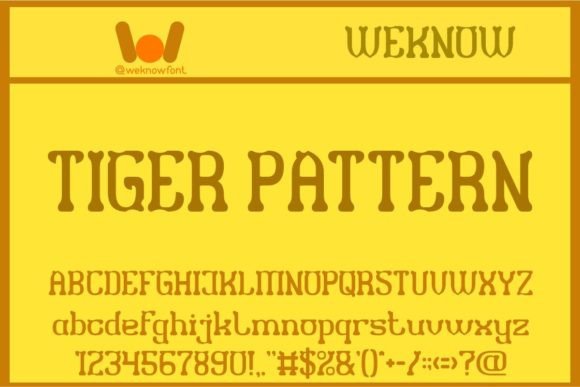
Tiger Pattern Display Font for Handmade Labels and Branding
I was sitting at my craft table last Thursday, a fresh batch of soy candles cooling beside me, when I opened a new design file to create the labels. I had the wax color nailed down—a warm amber—and the vessel was a simple brushed concrete. But the label text? That was the missing piece. I needed something that felt playful yet polished, something that would catch a customer’s eye from across a market booth. That’s when I remembered Tiger Pattern, a distinctive and whimsical display font I had bookmarked weeks earlier. I dropped the word “Ember” into the preview box, and the letters practically danced off the screen. The exuberant vibe of Tiger Pattern turned a plain product name into a tiny piece of art, and I knew right then this display font would become a staple in my shop.
What Makes Tiger Pattern a Distinctive Display Font for Crafters
When you work with your hands—whether you’re cutting vinyl, printing sticker sheets, or designing digital templates—you develop an instinct for which fonts will translate well into physical products. Tiger Pattern falls squarely into the category of playful, character-driven typefaces that feel both handcrafted and purposeful. Its strokes have a lively, almost bouncy rhythm, with unexpected curves and angles that give it a sense of movement. This is not a font that fades into the background; it demands attention. For a handmade seller, that’s gold. Whether you are branding a line of artisanal soaps or creating a printable wall art set for an Etsy shop, the personality of Tiger Pattern communicates energy and creativity right out of the gate. It strikes a rare balance between whimsy and legibility, making it suitable for short phrases, product names, and decorative headings where you want the letterforms themselves to tell a story.
Using Tiger Pattern for Handmade Labels and Boutique Packaging
One of the first real tests for any display font in my studio is how it behaves on a product label. I print sample labels on matte sticker paper and stick them onto jars, boxes, and bags to see how the text reads at different sizes. Tiger Pattern shone on candle labels because its generous x-height and open counters kept the letters clear even when the label was only two inches wide. I used it for the product name—“Wildwood,” “Maple + Clove,” “Cedar Smoke”—and paired it with a simple sans serif for the scent notes and weight. The result was packaging that felt curated and boutique-ready. For boutique tags and hang tags, Tiger Pattern added a layer of charm that a standard sans serif simply could not match. I also tested it on kraft paper stickers for tote bags, and the font’s slightly uneven baseline gave each sticker a hand-stamped look that customers love. If you create packaging for your handmade goods, Tiger Pattern can elevate your presentation without requiring advanced design skills.
Tiger Pattern for Wedding Invitations and Brand Identity Design
Wedding stationery is a category where every detail matters, and the right display font can set the entire mood of an invitation suite. I recently helped a friend prototype her wedding welcome sign, and we used Tiger Pattern for the couple’s names and the phrase “Welcome to Our Celebration.” The font’s exuberant vibe softened the formality of the event while still feeling intentional and designed. It worked beautifully on a 16-by-20-inch acrylic sign, where the bold letterforms remained readable from across the room. For brand identity projects—whether for a small bakery, a children’s clothing line, or a handmade jewelry shop—Tiger Pattern can anchor a logo with personality. Because it is a display font, it is best reserved for headlines and primary text rather than body copy. I recommend using it for the brand name in your logo lockup or for short taglines that need to grab attention. When paired with a clean serif or a simple handwritten style, Tiger Pattern becomes the star of your brand’s visual voice.
Tiger Pattern in Digital Printables and Planner Pages
Printable creators will find Tiger Pattern especially useful for cover pages, section headers, and decorative titles in digital planners, wall art prints, and journal templates. I designed a set of motivational quote prints using a bold script for the body and Tiger Pattern for the featured word—“Create,” “Dream,” “Wander.” The font’s quirky elegance made each print feel like a limited edition. In a planner layout, it works well for month headers or weekly dividers, where a single word in Tiger Pattern creates an instant focal point. Because the font is designed for display use, keep the text short and let the letterforms breathe. Avoid setting long paragraphs or full sentences in Tiger Pattern, as the decorative nature of the typeface can become overwhelming in dense blocks. Instead, reserve it for the moments you want your customer to stop and smile.
Readability Tips for Tiger Pattern on Stickers, Signs, and Printables
If you plan to cut Tiger Pattern letters with a Cricut or Silhouette machine, a few practical considerations will save you frustration. The font’s intricate details and varied stroke widths mean that smaller sizes—anything under half an inch in height—may lose clarity, especially on textured materials like glitter vinyl or adhesive kraft paper. For stickers, I recommend scaling the text to at least one inch tall to preserve the character of the letterforms. For signs and larger printables, the font holds up beautifully at any size. When designing for print, always do a test cut or test print before committing to a full batch. I also found that Tiger Pattern pairs well with a solid outline or shadow layer in design software, which helps the letters stand out on busy backgrounds. For wedding welcome boards or farmhouse signs, adding a slight offset to the text can enhance readability without diluting the font’s playful spirit. Keep kerning in mind—some letter pairs may need manual adjustment to avoid awkward spacing, especially in all-caps settings.
Best Font Pairings for Tiger Pattern in Product Design
Even the most charismatic display font benefits from a thoughtful companion. In my own projects, I have found that Tiger Pattern pairs beautifully with a clean sans serif like Montserrat or Lato for body text, descriptions, or fine print. The contrast between the whimsical display style and a neutral sans serif creates a balanced hierarchy that guides the eye naturally. For a more vintage or romantic feel, try pairing Tiger Pattern with a simple serif such as Playfair Display or a light handwritten font like Pacifico. When I designed a set of holiday gift tags, I used Tiger Pattern for the recipient’s name and a thin sans serif for the message on the back. The combination felt cohesive without competing for attention. If you are working on a logo, consider using Tiger Pattern for the brand name and a subtle script for a tagline. Always test your pairings at the actual production size to ensure both fonts remain legible and harmonious.
Commercial Font Licensing for Selling Tiger Pattern Products
Before you start selling products that feature Tiger Pattern, whether they are physical goods like mugs and shirts or digital downloads like printable invitations and SVG templates, take a moment to review the commercial license that comes with the font. Most premium fonts in this category offer a standard license that covers physical products and small-scale merchandising, but the specifics can vary. Some licenses restrict the number of sales or require an extended license for mass production or digital resale. If you plan to use Tiger Pattern in templates or editable designs that you sell on platforms like Etsy or Creative Market, you almost certainly need a license that explicitly permits that use. Always check whether alternates, ligatures, and swashes are included in the purchase, as these extras can significantly expand your design possibilities. The file format also matters—OTF and TTF are standard for desktop use, while WOFF or WOFF2 may be needed for web projects. Investing in the proper license protects your business and ensures you can continue using Tiger Pattern as your product line grows.
From the moment I printed my first candle label with Tiger Pattern, I knew I had found a typeface that understood the spirit of handmade work. It brings a sense of joy to packaging, invites curiosity on shelf displays, and gives small-shop branding a polished, professional edge. Whether you are a stationery designer refining your next wedding suite, a soap maker labeling your new seasonal batch, or a printable creator building your digital shop, Tiger Pattern offers the kind of distinctive personality that makes customers remember your products. Let the exuberant vibe of this display font carry your next project from your craft table to your customer’s hands.