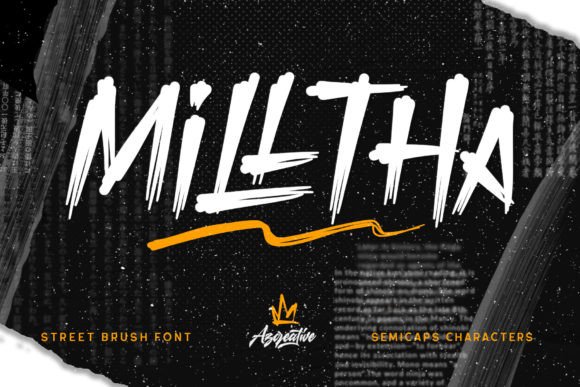
Milltha Display Font for Handmade Product Branding and Street Art Designs
I remember the afternoon I first opened the Milltha font file on my laptop. I was mid-way through designing a new line of soy candle labels for my small shop, and nothing I had tried captured the raw, urban edge I wanted. Then I dropped a test phrase into my design software, chose Milltha from the drop-down menu, and watched the letters transform. Suddenly, that plain label looked like it belonged on a shelf in a curated Brooklyn boutique. The uneven, hand-drawn strokes carried exactly the street art authenticity I had been chasing. For any crafter, handmade seller, or printable creator who wants their products to feel immediate, honest, and visually bold, Milltha is the display font that turns ordinary packaging into a statement.
Milltha Display Font for Handmade Candle Labels and Product Packaging
When I design candle labels, I think about what the customer sees first. A clean sans serif might feel too corporate, and a delicate script can get lost against a dark jar. Milltha, with its raw and edgy street art vibe, lands perfectly in the middle. The letterforms have a hand-painted quality that makes each word feel like it was spray-painted onto a brick wall, then carefully transferred to a glass jar. I used Milltha for a limited batch of peppered sage candles, setting the scent name in all caps with generous tracking. The result was a label that felt both industrial and intentional. The Display classification of this font means it shines in short, impactful applications: product names, scent titles, brand logos, and taglines. For makers working with candle labels, soap wraps, or bath product packaging, Milltha offers a visual shortcut to that coveted handmade-but-professional look.
Using Milltha Font for Wedding Invitations and Event Stationery
Street art and weddings might seem like an unlikely pairing, but I have found that Milltha brings an unexpected warmth to informal wedding stationery. For a backyard celebration with a rustic, bohemian theme, I used Milltha for the couple's names on the invitation suite. Paired with a clean serif for the body text, the contrast was striking. The font's uneven baseline and varied stroke widths added a handcrafted feel that matched the handmade paper I printed on. Milltha works especially well for engagement party signs, welcome boards, and seating charts where you want the lettering to feel personal rather than rigid. Because this is a Display font, I recommend using it for names, dates, and short phrases rather than long paragraphs. The personality of Milltha is strongest when each letter has room to breathe and make its own impression.
Milltha for Printable Wall Art and Home Decor Signs
Printable wall art is one of my best-selling digital download categories, and Milltha has quickly become a go-to choice for my urban-inspired collections. I designed a set of motivational quote posters with short, punchy phrases like "Stay Wild" and "Create Fearlessly." The font's raw edges and slightly irregular letter spacing gave each poster the look of original hand-lettered art rather than a mass-produced print. Home decor signs, especially those with a farmhouse or industrial aesthetic, benefit from the authenticity Milltha brings. For a wooden sign project, I used the font to spell out "Kitchen" and "Gather," then cut the design with my vinyl cutter. The letters transferred cleanly and retained their edgy character even at larger sizes. When selling digital templates, I always include a preview image showing Milltha in action, because customers can immediately see the street art influence and understand how it will look on their own walls.
Pairing Milltha with Complementary Fonts for Boutique Branding
No font works in isolation, and Milltha is no exception. In my shop, I pair this display font with a clean sans serif for product descriptions, ingredient lists, and care instructions. The contrast is what makes the branding cohesive. Milltha provides the personality and emotional hook, while a simple sans serif handles the readability for smaller text. For boutique clothing tags, I set the brand name in Milltha and the size and care details in a lightweight sans. On tote bags, the brand name stands out in Milltha across the front, while the back features a shorter tagline in a handwritten script that echoes the font's organic feel. When choosing pairings, look for fonts with similar proportions or x-heights to keep the overall design balanced. Milltha's street art roots mean it pairs naturally with grunge textures, distressed backgrounds, and neutral color palettes. For a more polished look, combine it with a refined serif font to create a tension between raw and elegant.
Commercial Use of Milltha Font for Stickers, Tags, and Digital Downloads
One of the first questions I ask before purchasing a premium font is whether the commercial license covers my specific use cases. Milltha from Azcreative Studio is designed with creators in mind, and I always check the license details before selling physical products. For my sticker sheets, I use Milltha to spell out thematic words like "Vibes" and "Good Energy." The stickers sell well because the typography itself feels like art. The same applies to product tags: a small hang tag with a handwritten-style word in Milltha instantly elevates the unboxing experience. For digital download templates, I set preview text in Milltha to show customers how the final product could look. When creating SVG-style designs for cutting machines, I pay attention to the font's stroke consistency. Milltha's strokes are generally thick enough to cut cleanly on a Cricut or Silhouette, but I always test a sample before committing to a large batch. For very small stickers or tags under one inch, I recommend scaling up the font size or using a simpler pairing font to maintain legibility.
Readability Tips for Milltha on Cutting Machines and Small Labels
Cutting machine users often worry about intricate fonts losing detail at small sizes. With Milltha, I have found that the font performs best when the text is at least half an inch tall for vinyl cutting and slightly larger for print-and-cut stickers. The raw, hand-drawn style includes some natural variation in stroke width, which actually helps the letters hold together during weeding. For small product labels, such as those used on lip balm tubes or mini candle tins, I use Milltha for the brand name only and rely on a simpler font for the rest of the copy. When printing on dark surfaces, I recommend using a light color or metallic foil to make the street art details pop. The font also works beautifully as a design element on its own: a single initial or a short word becomes a focal point on a mug, shirt, or tote bag. Before selling any physical merchandise, I always print a proof and view it under natural light to ensure the letters read clearly and the raw aesthetic translates as intended.
Exploring Alternate Characters and Ligatures in Milltha
One of the joys of working with a premium display font is discovering the extras hidden inside the font file. Milltha includes alternate characters and ligatures that let me customize the lettering for each project. For example, when I design a limited edition product label, I can choose a swash-style letter or a different ending stroke to make the text feel unique. These alternates are especially useful for logo design and branding where you want a one-of-a-kind look. I always check whether the font includes multilingual support, especially if I plan to sell templates or printables in different languages. Milltha's character set covers a wide range of accents and special characters, which is essential for reaching a broader audience. When creating digital downloads, I include a guide sheet showing the available alternates so customers can access the full creative potential of the font. This small step adds value to my products and helps buyers feel confident in their design choices.
File Formats and Compatibility for Physical and Digital Products
Before I start any design project, I confirm that the font file is compatible with my design software. Milltha is available in OTF and TTF formats, which work seamlessly with Adobe Illustrator, Photoshop, Procreate, Cricut Design Space, Silhouette Studio, and most other design platforms. For physical products like mugs, shirts, and signs, I use the OTF format for the best quality. For digital templates and printable wall art, the TTF version ensures consistent rendering across different devices. I also recommend installing the font on your computer rather than relying on cloud-based previews, as this gives you access to all the alternates and ligatures. When uploading preview images for my Etsy listings, I always use Milltha in the main mockup photo so customers can immediately see the font's street art personality. The Display classification means Milltha is optimized for headlines and short text, so I avoid using it for long paragraphs in my shop descriptions or digital products.
Milltha has become a staple in my design toolkit because it bridges the gap between raw artistic expression and commercial polish. Whether I am labeling a candle, designing a wedding sign, or creating printable wall art, this font delivers the authentic urban feel my customers respond to. For any crafter, handmade seller, or printable creator looking to add edge and personality to their products, Milltha from Azcreative Studio is a display font that delivers on every level.